Installation wiring diagrams are essential to any home improvement project. Whether you're planning a new kitchen, bathroom, or other home renovation, having the right wiring diagrams is essential for proper installation. But installation wiring diagrams can be confusing and difficult to read, leaving many homeowners feeling overwhelmed and intimidated.
Fortunately, by understanding the basics of installation wiring diagrams, homeowners can take on their own projects with confidence. In this article, we’ll explain the basics of installation wiring diagrams, how they work, and how you can use them to make your home improvement projects a success.
Installation wiring diagrams are two-dimensional drawings that show the location of electrical components in relation to one another. They’re typically used to show how different circuits, switches, and outlets connect to each other, as well as how the power is distributed throughout the home. Understanding the basics of installation wiring diagrams is key to properly installing any electrical component.
The most important part of a wiring diagram is the symbols. These symbols represent different types of components, such as switches, outlets, and circuit breakers. Each symbol will have a different meaning, so it’s important to learn what each symbol means before attempting to install any electrical components.
In addition to the symbols, installation wiring diagrams also feature lines that connect the different components together. The lines indicate the flow of electricity between the components, so it’s important to follow the lines when wiring.
Installation wiring diagrams can also feature abbreviations and acronyms, which may be confusing to some homeowners. However, these abbreviations and acronyms are often used to indicate the type of wires or components needed for a particular installation. For example, a GFCI outlet may be indicated with a “GFI” abbreviation.
Finally, installation wiring diagrams also feature numbers and letters, which provide information about the specific component being installed. The numbers and letters often provide information about the voltage, amperage, and wire gauge of the component. It’s important to understand the numbers and letters before beginning an installation.
By understanding the basics of installation wiring diagrams, homeowners can take on their own home improvement projects with confidence. Armed with the proper knowledge and tools, homeowners can install and troubleshoot electrical components without relying on expensive professionals. So before starting a project, be sure to consult with the wiring diagrams to ensure a safe, successful installation.
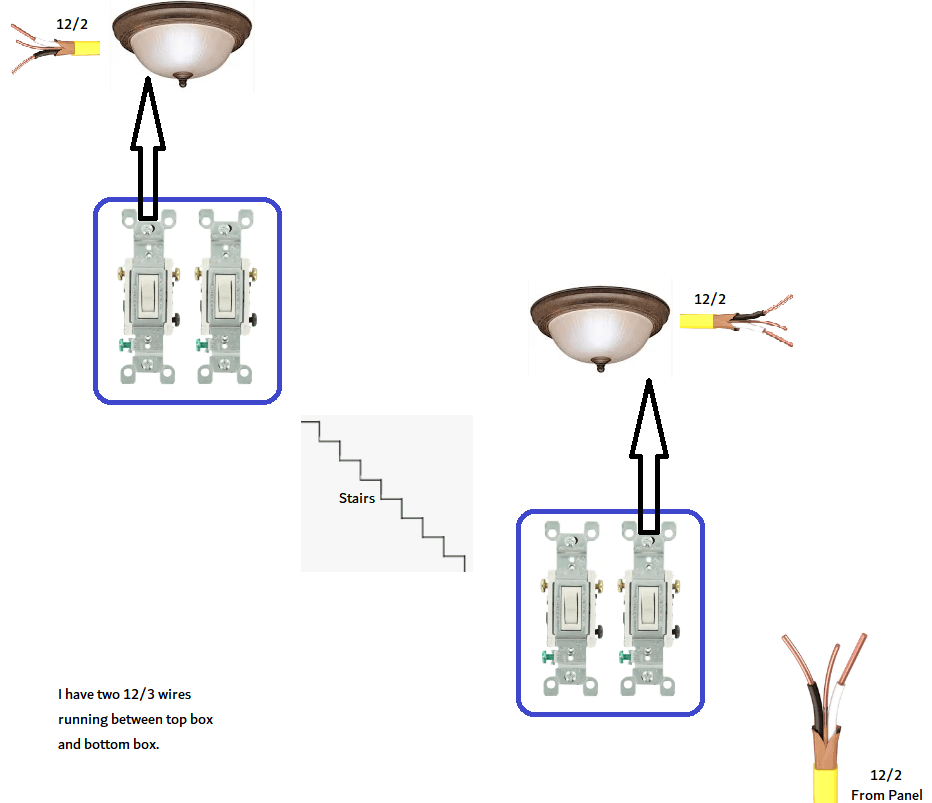
Two Way Staircase

Two Way Light Switch Connection

How To Wire A 2 Way Staircase Light Switch
.png?strip=all "Staircase Wiring Diagram Control Light From 2 Or More Places Etechnog")
Staircase Wiring Diagram Control Light From 2 Or More Places Etechnog

Learn Staircase Wiring And 2 Way Switch Connection

Mechanical A Two Way Switch Wiring Diagram For Staircase Lighting

How To Wire A 2 Way Staircase Light Switch

Solved Connecting A Double Stair Switch Wiring Diagram Explanation

Wiring Diagram House Staircase The

How To Wire A 2 Way Staircase Light Switch

Electrical Online 4u All About Electronics Page 11 Of
Mechanical A Two Way Staircase Wiring Diagram Showing How Multiple

Electrical A Two Way Switch Wiring Diagram For Staircase Lighting
